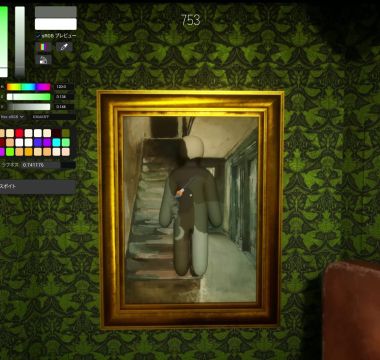
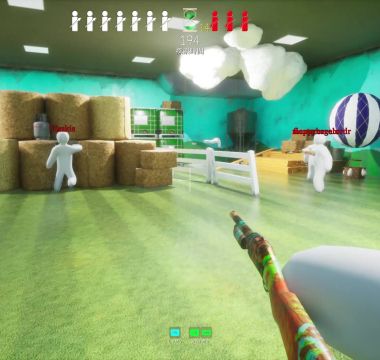
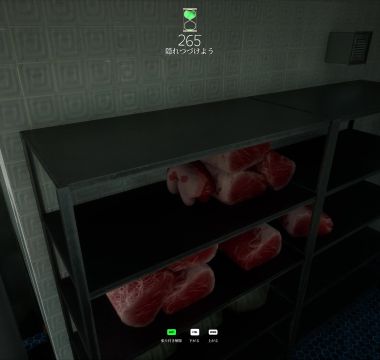
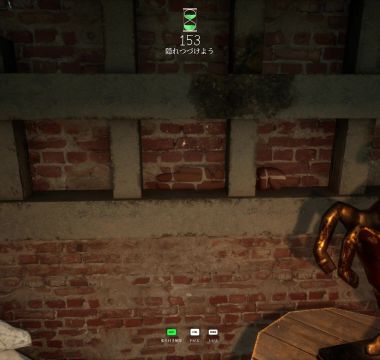
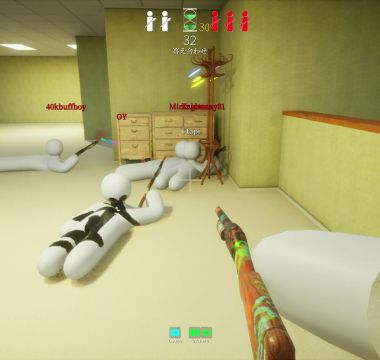
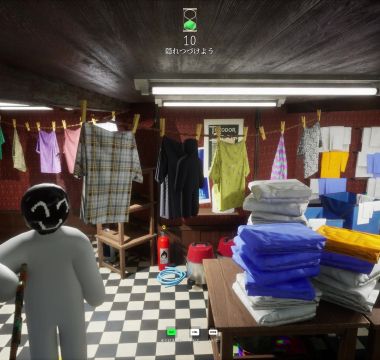
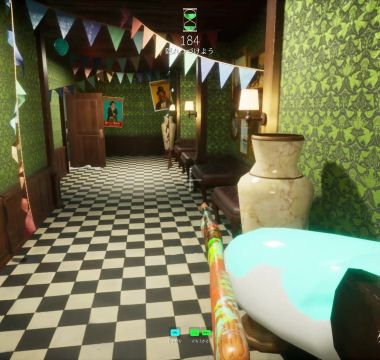
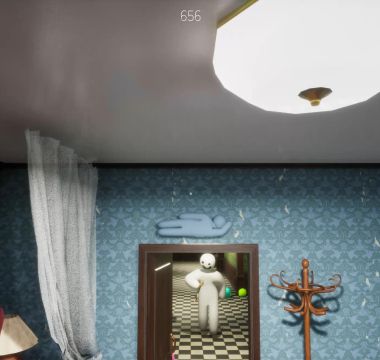
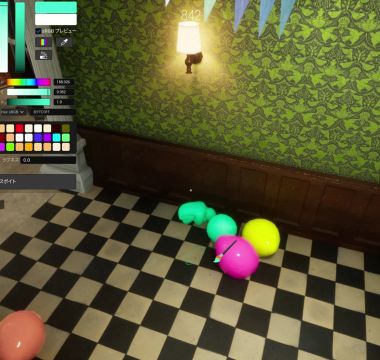
Meccha Chameleon is the kind of arcade platformer that reminds me why short, sharp games still matter. It does not waste time explaining itself, and that is part of the charm: you enter a fast-moving world, react on instinct, and learn to think on your feet. As an experienced gamer, I appreciate when a game trusts the player to keep up, and Meccha Chameleon does exactly that. It feels playful at first, then gradually reveals a surprisingly demanding rhythm that turns every stage into a small test of memory, timing, and nerve.
What stood out to me most is how the game keeps its core idea simple while squeezing a lot of personality out of it. The movement has a lively, almost comic energy, but the level design is built around precision. You are constantly being asked to shift, adapt, and commit. That makes every successful run feel earned, and every mistake feels like a lesson rather than a punishment. If you are the type who likes to download games that can be picked up quickly but still reward repeat play, this one has real appeal.
Chaotic speed with a clever twist
Meccha Chameleon is not just another platformer with bright colors and quick restarts. It lives and dies on momentum. The game’s central mechanics encourage fast decision-making, and that is where it finds its identity. You are not simply running through stages; you are negotiating them. Obstacles appear at a pace that keeps your attention locked in, and the game asks you to read patterns with enough confidence to act before hesitation takes over.
That design choice gives the experience a lot of replay value. Even when you know a stage, you are still trying to refine your route, preserve flow, and make cleaner decisions. It is the sort of game players will free-to-play in short sessions and then find themselves returning to for “just one more try.” When a game can do that without overcomplicating itself, it has already done half the work.
Presentation that sells the tone
Visually, Meccha Chameleon leans into a playful arcade style that suits its pace. The world has a cartoon-like snap to it, with clear shapes and bold motion that help the action remain readable even when the screen gets busy. That readability matters more than raw spectacle, because the game is built around split-second movement. When you are weaving through hazards, clipping corners, or making a recovery jump, you need to understand what is happening instantly.
The audio design also helps carry the experience. Sound cues reinforce the game’s comic energy while quietly supporting timing and tension. The result is a game that feels light on the surface but can become intensely focused underneath. It has the same kind of energy I look for in classic arcade-style releases: easy to start, hard to master, and always eager to throw another challenge at you.
How it feels to play
The best part of Meccha Chameleon is the sensation of movement. Good platformers live on momentum, and this one makes motion feel intentionally expressive. You are not just reacting to the stage; you are learning how your character’s flow interacts with the level geometry. That makes success feel physical in a satisfying way. When the controls are working in your favor, the game clicks beautifully.
There is also a nice balance between freedom and discipline. The game lets you experiment, but it is clear that sloppy play will be punished. That tension keeps the experience exciting. If you like to search for min-max routes, test odd interactions, or look up cheats and mods in games after your first clear, you will probably find Meccha Chameleon fertile ground for experimentation. Even without that extra layer, the base game has enough character to stand on its own.
Who will enjoy it most?
This is a game for players who enjoy action with pressure, but not in the overwhelming modern sense of endless systems and menus. Meccha Chameleon is more focused than that. It is ideal if you want something you can install quickly, learn through repetition, and play in bursts. It rewards people who like to improve through muscle memory and pattern recognition. If you are coming from the world of precision platformers or compact arcade challenges, you will feel at home.
At the same time, it is approachable enough that newcomers can enjoy the first stretch without feeling buried. That said, the difficulty rises in a way that will expose impatient play. You cannot coast through this one. The game wants your attention, and it earns it by making each stage feel lively and unpredictable without becoming messy.
What it gets right
For me, the strongest achievement here is pacing. Meccha Chameleon knows when to push hard and when to let the player breathe for a moment. That balance keeps the game from becoming exhausting. It also helps that the restart loop feels clean, which is essential in a game where repetition is part of the fun. You will fail, reset, and immediately want to try again. That is the mark of a good arcade design philosophy.
Another strength is how little friction there is between intention and action. I never felt like the game was getting in the way of my own decisions. When I messed up, it felt like my error. When I succeeded, it felt deserved. That kind of honesty is refreshing. It is also one of the main reasons the game holds up across platforms, because strong core gameplay travels well whether you are on a console, PC, or another supported device.
What could be better
If I have a complaint, it is that Meccha Chameleon occasionally leans so hard into its own speed that some players may wish for a little more onboarding. The game assumes you are willing to learn by doing, which is fair, but not everyone enjoys that style immediately. A few more early hints or softer introductory sequences might have widened its appeal without diluting the challenge.
There is also the question of content longevity. Because the structure is so focused, players who want a huge campaign may finish the game and move on rather quickly. That is not a flaw so much as a design choice, but it is worth mentioning. If you are looking for a long checklist of systems, this may not be the ideal fit. If you want a compact experience with strong replay value, it lands better.
Final verdict
Meccha Chameleon succeeds by knowing exactly what it wants to be. It is fast, colorful, responsive, and just demanding enough to keep you engaged without turning into a chore. As an experienced gamer, I respect that kind of restraint. The game does not try to imitate bigger releases or drown you in features. Instead, it focuses on movement, timing, and personality, and that focus gives it real identity.
If you are looking for a game to download and play in repeat sessions, this is a solid pick. It may not be the most expansive title on the market, but it is confident, memorable, and easy to recommend to anyone who enjoys platforming with a sharp arcade edge. Whether you want to free yourself into a quick session after work or chase better runs on supported platforms, Meccha Chameleon delivers a compact challenge that is worth your time.
Score-wise, I would place it firmly in the “recommended” category. It is not trying to be everything, but what it does, it does with style.
How to download MECCHA CHAMELEON
Availability & Launch: Meccha Chameleon is typically accessed through official digital storefronts or publisher channels, and availability may vary by region. If a free demo or free version exists, it will usually be listed on the game’s official page or store listing.
Platforms: Check the current store page for supported platforms such as PC or console. If a platform is not directly supported, download options may be unavailable there, and cloud play or an emulator may be required only if the game is not natively released for your device.
Install: To install, open the official storefront, search for MECCHA CHAMELEON, select download, and follow the on-screen prompts. On PC, the installer or launcher will guide setup; on mobile, use the app store and tap install.
System Requirements: On PC, expect modest indie-style requirements: a recent processor, 4 GB RAM or more, and a basic graphics card. On Mac or Android, check the store listing for device compatibility before you install.
Cheats / Mods: Cheats are usually not part of the standard release, and mods depend on whether the developer or community supports them. Always verify mod compatibility before using custom content.
Unblocked Access: Unblocked play in schools or workplaces is not guaranteed. Access depends on local network rules, platform restrictions, and whether the game is browser-based or installed through a regular client.